Monday, 1 September 2014

Task 2 - Research - Hiroko Koshino

Hiro Kohino is a Japanese designer who established her own label in 1964. In her work you can see a link between Japanese culture and Western styles. 

The tie around the waist (called the obi) reminds me of the traditional Kimonos worn by all the Japanese up until the mid 19th century.

The start of her collection was mostly black and I think that is probably what I like the most about this collection, because that is to my taste. To me, the styles and shapes of the garments say more because they are simpler and that the design of the garments stands out more.

The other half of the collection has more of a pattern element to the designs but still keeps a similar theme flowing throughout the collection in her use of style.

The print patterns she has used have a traditional feel because of the natural theme that is seen a lot in historical Japanese clothing. 

I admire the mix of tradition and futuristic design elements in her work and in my opinion she has found the right balance between the two opposite influences.


When designing my collection I will try to incorporate the balance that Hiroko Koshino has managed to perfect in her work. 

These are a few images from her Fall Winter 2009/2010 Ready-To-Wear collection. 

All images are from:


Thursday, 28 August 2014

Task 2 - Research - Suk-Hyun Hanbok


Strictly speaking Suk- Hyun Hanbok isn't a Japanese designer but actually a Korean fashion designer. 


However I find that traditionally Chinese, Korean and Japanese (Eastern Asia) cultures are sympathetic and been influenced by each other over the time. 


Suk-Hyun's designs are all heavy layered with a recognisable East Asian print pattern. 

The term Hanbok translated means tradition dress, this means that Suk-Hyuns designs are the traditional style but with a contemporary twist by, from what I can tell, the choice of fabric, vibrant colours and patterns used. 

The designs also give a nod to more traditional Hanboks by the use of decoration through embroidery as well as pattern woven fabrics.

To me, the patterns are all quiet natural and fresh because of they are floral and leafy shapes, giving the heavy, almost bulky clothing a softer feminine touch.

However, despite the Hanboks being a little 'bulky' and having a awkwardness to them, I like the shapes and styles of them because it has that traditional quality. Personally I've always found that the traditional side helps inspire the ideas for my work and this style will no doubt influence my future work.


All images from:
http://sukhyun.co.kr/new/

Monday, 25 August 2014

Task 2 - Research - Launa D. Romoff


Launa D. Romoff is a mixed media artist that creates collages from found materials.

She started working with mix medias in 1997 and in the artist statement on her website Romoff says " I have been inspired by the work of Kurt Schwitters, regarded by most as the 20th century master of collage. He once said, "How I use the material is often more important than the material itself." This attitude is also reflected in my creative process. "


Romoff has created three pieces of work in Her Asian Gallery ( http://www.launa-d-romoff.com/galleries.html?gallery=6 ) that, to me, have a clear Japanese influence flowing through her work.

In these pieces of Romoff's work I admire the use of a limited colour pallet and how her chosen materials seem old, giving her work a fresh take on 'vintage' medias.
Before finding her work I wouldn't of thought about creating mixed media collages because of my background in Fashion. However after seeing her work I will experiment in creating collages for prints for length of fabric inspired by her work. 

Tuesday, 19 August 2014

Task 2 - Japanese Theme Decision

For the inspiration for the theme for my brief I selected the Samurai Sword from my research at Blackburn Museum. 


I've decided to use the Japanese culture, artwork and designers to influence my work. 
As a starting point I created a second board on Pinterest to see what other artist and designers have produced in the style or influence by classic Japanese culture and artwork. Throughout this brief I will use Pinterest as a way of finding research and inspiration of my work.


Tuesday, 12 August 2014

Task 2 - Summer Brief Project


I've created a Pinterest board called Summer Brief Project showing different designers' work, artwork and clothing that could of been influenced by any of the seven collections I saw in Blackburn Museum. The board shows the end products of designers and artist that could of had the same starting point or been inspired by the pieces in the different collections at Blackburn Museum. 
I still need to pick one of the the collections as a starting point to decide the theme of my brief.


Thursday, 7 August 2014

Task 1 - Blackburn Museum - Fine Art Collection


In the Fine Art Collection at Blackburn Museum is a collection of Japanese wood block paintings and artefacts from the same time period. 
The samurai sword in the exhibition caught my attention more compared to the wood block paintings because of the intricate details and textures of the patterned carving. 
This piece is on loan from the Grundy Art Gallery in Blackpool and was intended as a more decorative piece rather then a weapon. In the late 19th century carrying swords was banned in a attempt to mordernize the country. This piece is from the same time but produced as a decorative item with a poor quality blade.
I want to research more in depth about the culture that has created the pattern and what it symbolises. 
I also want to know what other artists and designer have started at a simpler starting point or used a similar influence for there work.

Task 1 - Blackburn Museum - Coins and manuscripts

The collection of historical artefacts in the form of coins and 
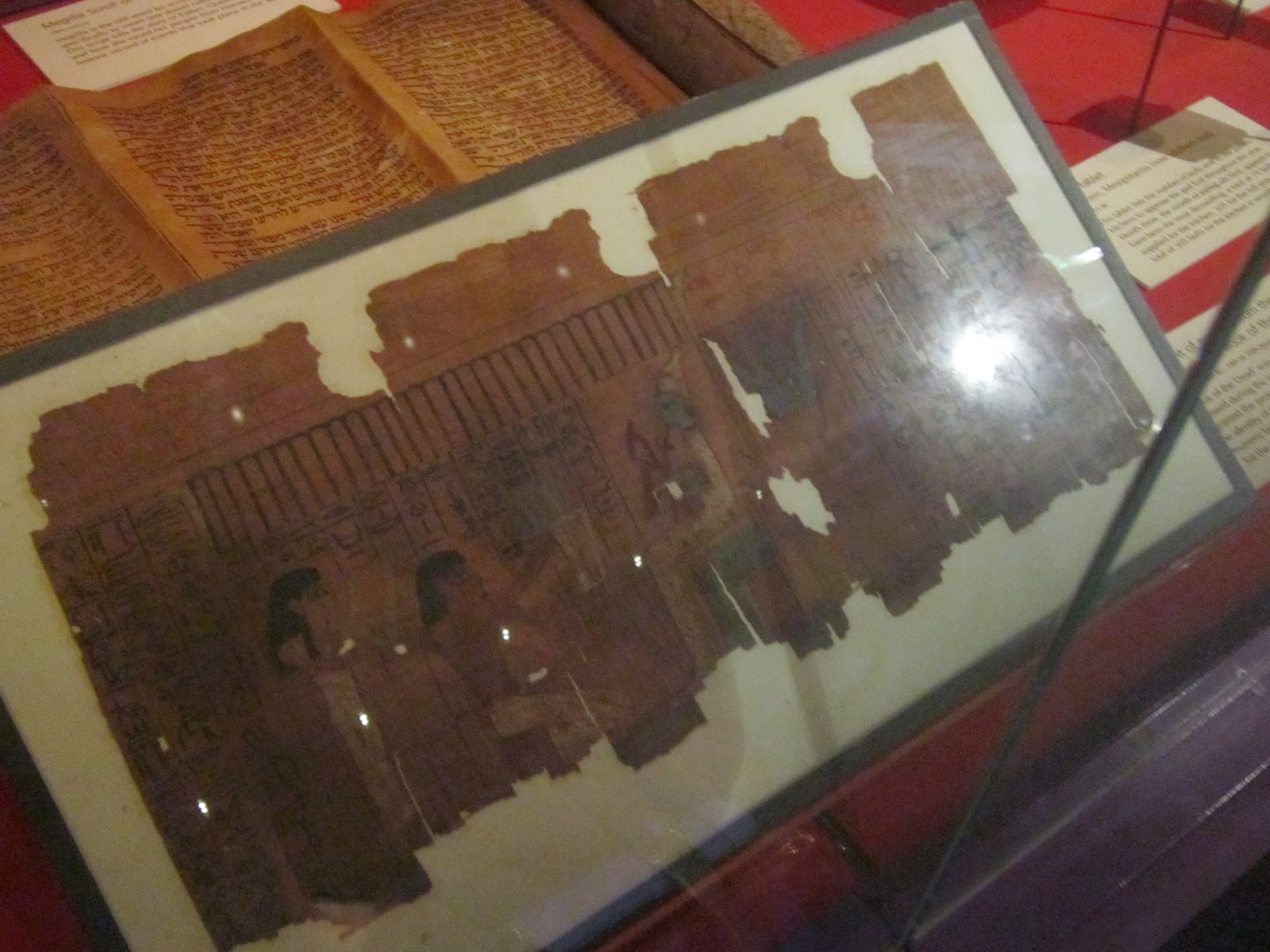
manuscripts was bequeathed to the museum by local rope maker R.E Hart in the 1940's after his death. The collection houses manuscripts that date back as far as 2055BC and also includes some of the earliest printed books by William and Caxton. The collection of coins is home to British, Roman and various city-states in Ancient Greece. The collection is a representation of history through the ages. 
The piece that caught my attention the most was the fragment of Papyrus from the Book of the Dead, written around 1300BC as a 'guide book' to a happy afterlife. Compared to the elaborate, brightly decorated manuscripts the fragment of papyrus was more humble in its appearance as apposed to the rest of the collection appealing to my personal taste. I am intrigued by the cultural history behind the beliefs shown in the fragment and how the ancient culture has influenced the modern way of life; for example how it has been translated to influence interiors and fashion, such as decorative wall papers and accessories.